
Tonga’s Second International Cable Strengthens Telecom Resilience
Tonga’s telecommunications network operates across a widely dispersed island nation where international connectivity depends heavily on submarine cable systems. This makes cable availability a national service issue, not simply a capacity issue. So, now let us see Can Tonga’s second submarine cable keep the country connected during the next major disaster along with Reliable LTE RF drive test tools in telecom & RF drive test software in telecom and Reliable 5g tester, 5G test equipment, 5g network tester tools in detail.
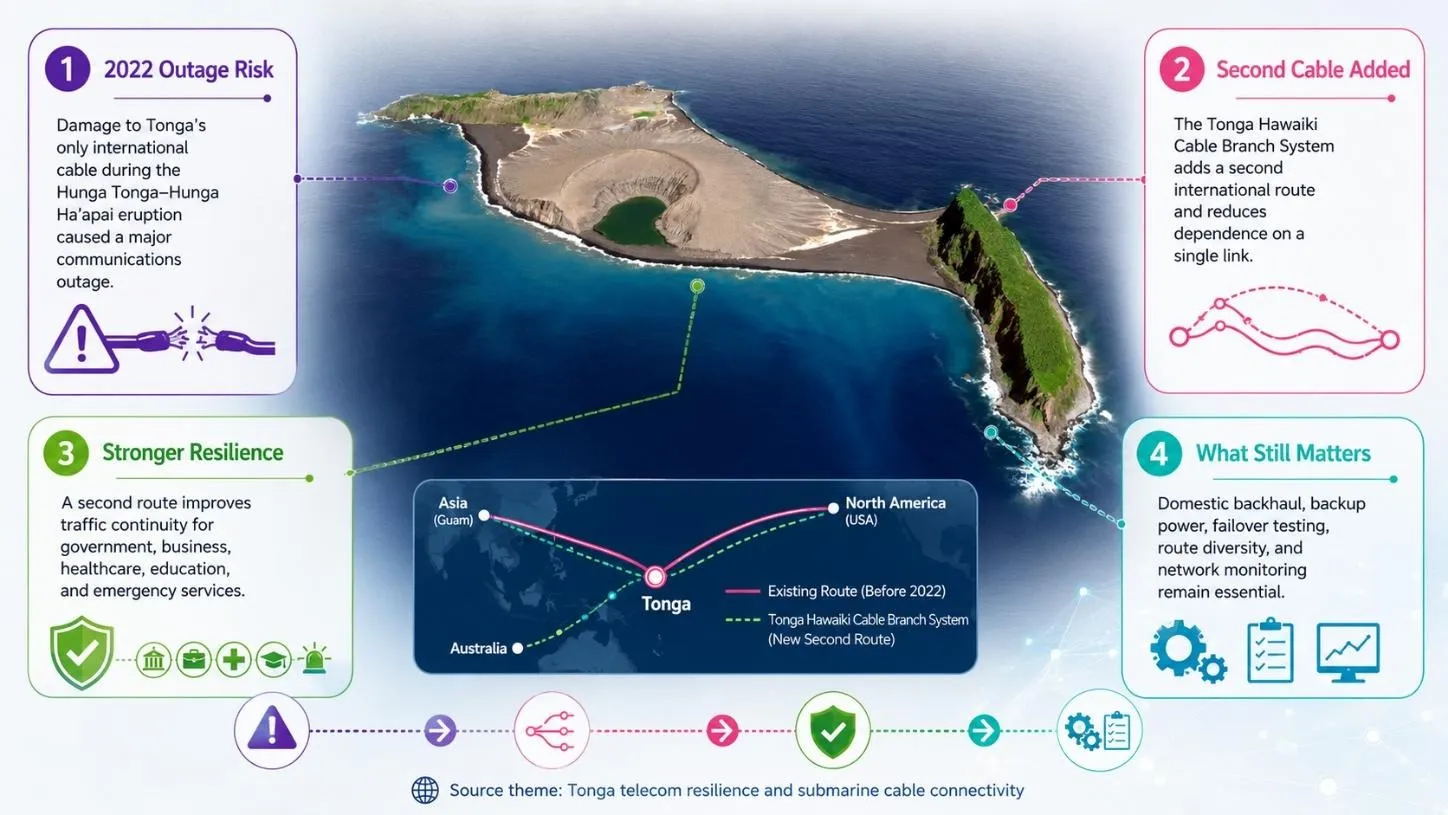
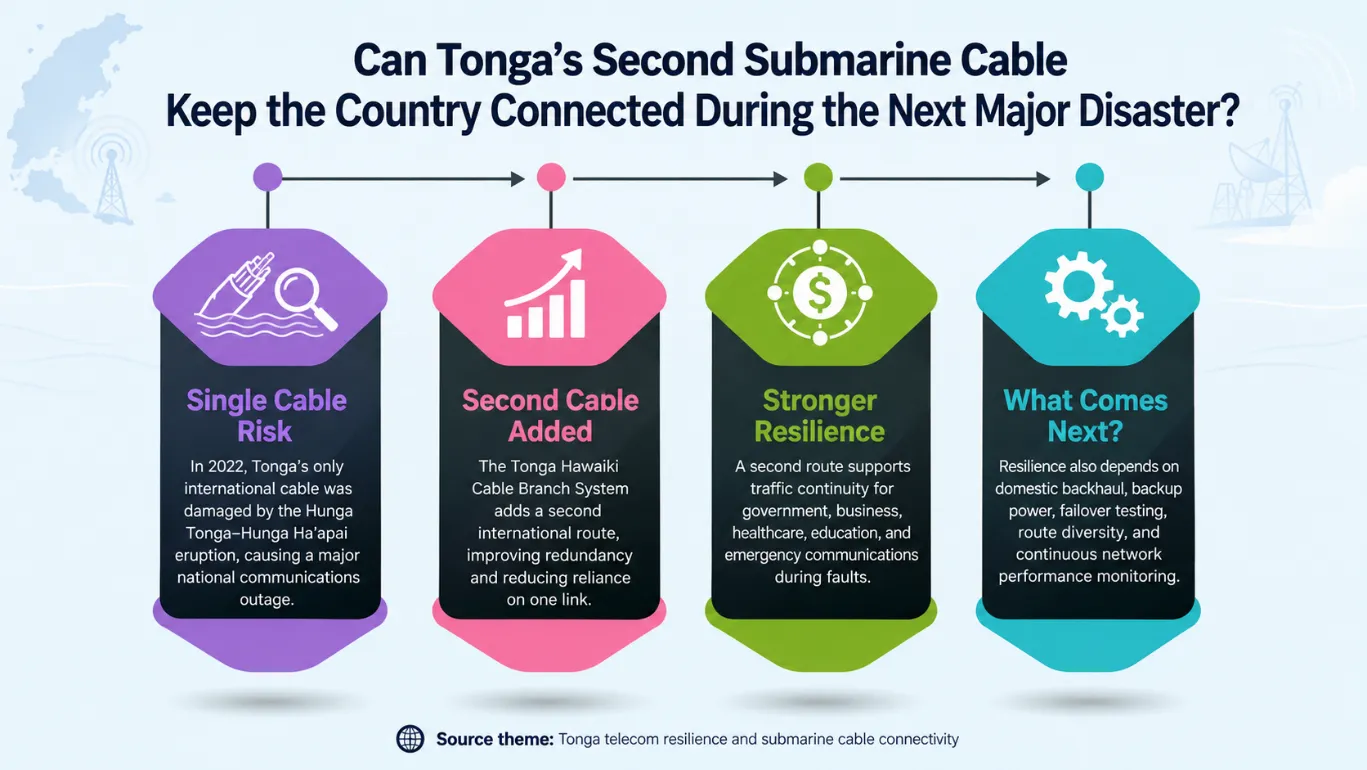
When the Hunga Tonga–Hunga Ha’apai eruption and tsunami damaged international and domestic cable links in January 2022, Tonga experienced a serious communications outage. The incident showed how a single cable failure can affect national connectivity when there is limited alternative capacity.
The completion of the Tonga Hawaiki Cable Branch System is a major step towards reducing this risk. The new 405 km cable is Tonga’s second international submarine cable. It branches from the Hawaiki system and lands at Vava’u, while the existing Tonga Cable provides the link between Fiji and Tongatapu. Together with the domestic cable extension between Tongatapu, Ha’apai and Vava’u, the new connection gives Tonga a stronger base for maintaining international traffic during cable faults or natural disasters.
Why a Second Cable Matters
A second international cable changes how a national network can respond to failure. With one route, a cable cut can remove most international capacity. With two routes, traffic can be redirected when the network has the correct transmission capacity, routing policies, upstream agreements and operational procedures.
The benefit goes beyond normal internet access. Government systems, emergency services, healthcare providers, schools, banks, mobile networks and business applications all depend on stable international links. During a severe event, these services need to remain available even if the normal route is disrupted.
For telecom operators, resilience depends on more than installing another cable. The network must be designed to detect faults quickly and move traffic without long manual intervention. Core routers, international gateways, DNS services, authentication platforms and data-centre links should be reviewed for single points of failure.
Regular failover testing is also required. An alternative route should be tested under live traffic conditions so that routing, capacity and service availability can be confirmed before an actual emergency occurs.
Domestic Connectivity Also Needs Protection
International redundancy is only one part of the solution. Tonga’s domestic network must also be able to move capacity between islands and local access networks. The domestic cable linking Tongatapu, Ha’apai and Vava’u is therefore a key part of end-to-end service continuity.
Mobile sites, fibre aggregation points, microwave links and cable landing stations need backup power, protected transport paths and remote monitoring. In high-risk locations, operators should review battery runtime, generator availability, spare equipment, fuel access and repair-team readiness.
Satellite connectivity can provide an emergency service layer when submarine or terrestrial routes are unavailable. However, satellite should be planned as a backup for priority traffic such as government coordination, emergency calls, health services and network management. It is not a full replacement for the capacity delivered by a submarine cable.
Testing Network Performance During Normal and Peak Conditions
A resilient network needs continuous measurement. Operators should test more than coverage. They also need to measure throughput, latency, packet loss, voice quality, service availability and network recovery behaviour.
Measurements should be collected across populated areas, ports, airports, government facilities, healthcare locations and outer-island sites. Testing should include normal operating periods as well as busy periods when mobile and broadband usage is higher.
This helps operators identify weak areas, confirm the impact of capacity improvements and validate whether failover arrangements maintain acceptable user experience.
Conclusion
Tonga’s second international cable is a practical investment in national telecom resilience. Its value will be measured by how well services continue operating during the next cable fault, cyclone, earthquake or volcanic event.
The next focus should be on strong domestic transport paths, backup power, regular route testing and network performance monitoring across the country. This will help Tonga maintain reliable communications for communities, businesses and emergency services when connectivity matters most.
About RantCell
RantCell is a smartphone-based RF drive test and network performance testing platform used by mobile operators, regulators, system integrators, enterprises, and private network teams. It supports 4G, 5G, LTE, CBRS, Wi-Fi, indoor walk testing, drive testing, benchmarking, crowdsourcing, automated reporting, and remote network monitoring. RantCell enables engineering teams to collect real-time network KPIs, analyse service quality, and validate network performance using Android smartphones without the need for expensive traditional drive test equipment. Also read similar articles from here.